University College London

Qian Liu.

Exploring how facial geometry can guide the design of personalized eyewear.

My work connects 3D reconstruction, landmark-guided lens placement, and physical fabrication.

Explore my research
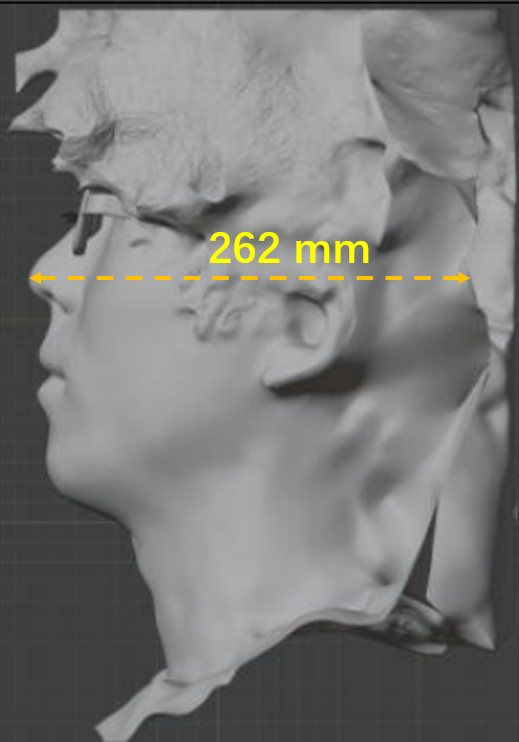
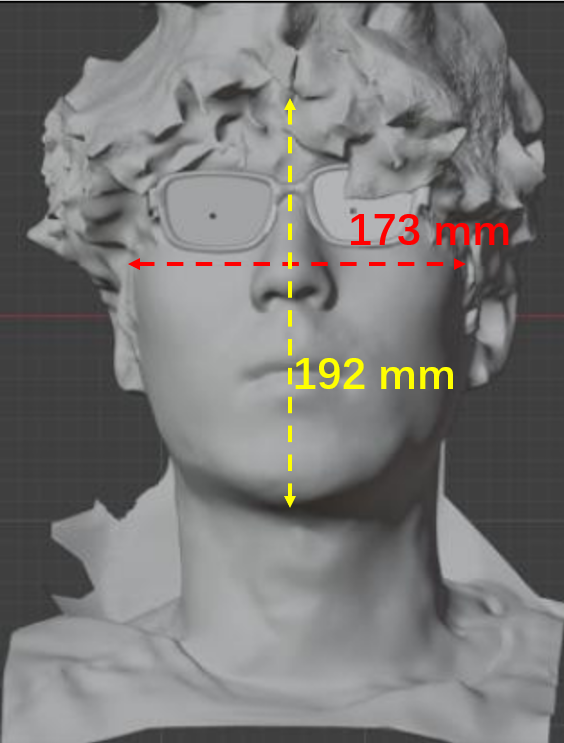
Side view of a reconstructed face, annotated with a head-depth measurement of 262 mm.Front view of the same reconstructed face, annotated with width and height measurements of 173 and 192 mm.
Facial geometry → personalized design01 / RESEARCH

Selected work

Research & publications

Accepted · SCF 2026 Poster

Automatic Lens Placement for Personalized 3D Printed Eyewear

Qian Liu, Ziyang Chen, Kenan Bektaş, Mustafa Doga Dogan, Kaan Akşit

SCF 2026 Poster · Manuscript available

We use Kiri Engine to reconstruct a 3D face from smartphone photographs and MediaPipe to detect facial landmarks in rendered views of the model. Scripts in Blender project these landmarks onto the face mesh and use the resulting eye and nose references to position the lenses and nose pads. With the lenses held fixed, we manually refine the frame in Blender using mesh editing and lattice deformation, then fabricate a personalized eyewear prototype by 3D printing.
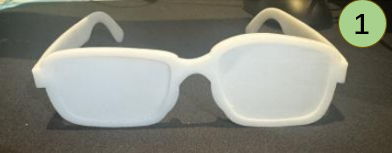
White 3D-printed eyewear prototype fabricated for the first participant.From a facial scan to a physical prototype

About this research

Lens placement.
Frame fitting.

Lens placement provides a fixed reference for personalizing the surrounding frame.

Personalized eyewear must coordinate lens positions, nose-pad contact, and frame shape for each face. Our workflow first establishes lens positions from image-derived eye references, then keeps the lenses fixed while the designer adjusts the surrounding frame in Blender.

  • Personalized eyewear
  • 3D reconstruction
  • Geometric modeling
  • Computational fabrication

Get in touch

Let’s talk research.

For questions about my work or potential collaborations.

zcecqli@ucl.ac.uk